Vermut in Madrid
Vermouth is a fortified wine infused with herbs, spices, and botanicals. Vermouth gets its name from the German word “wermut,” meaning wormwood, which is one of the traditional botanicals used in vermouth and contributes a slightly bitter flavor. Other herbs and spices include citrus peel, cinnamon, cardamom, clove, chamomile and many others. Both red and white vermouth come from white grapes, but red vermouth gets its color and rich taste from caramelized sugar or, in some cases, Pedro Ximénez.
Vermouth began in northern Italy in the 18th century, when wine was first infused with botanicals and fortified with spirit. As it spread across Europe and landed in Spain, it became far more than just a cocktail ingredient, it became part of Spanish life. The town of Reus, in Catalonia, soon emerged as Spain’s vermouth capital, home to more than 30 producers.
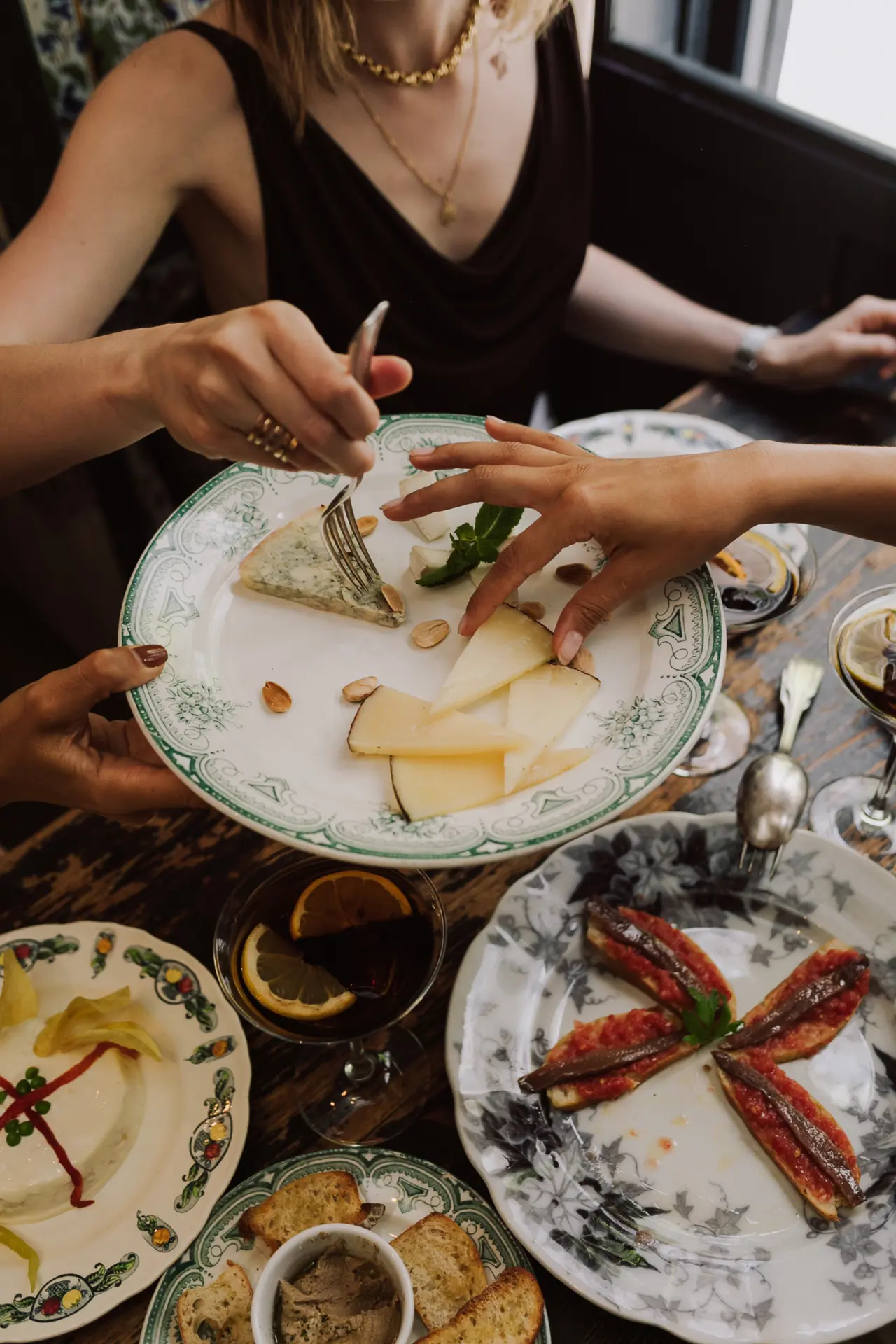
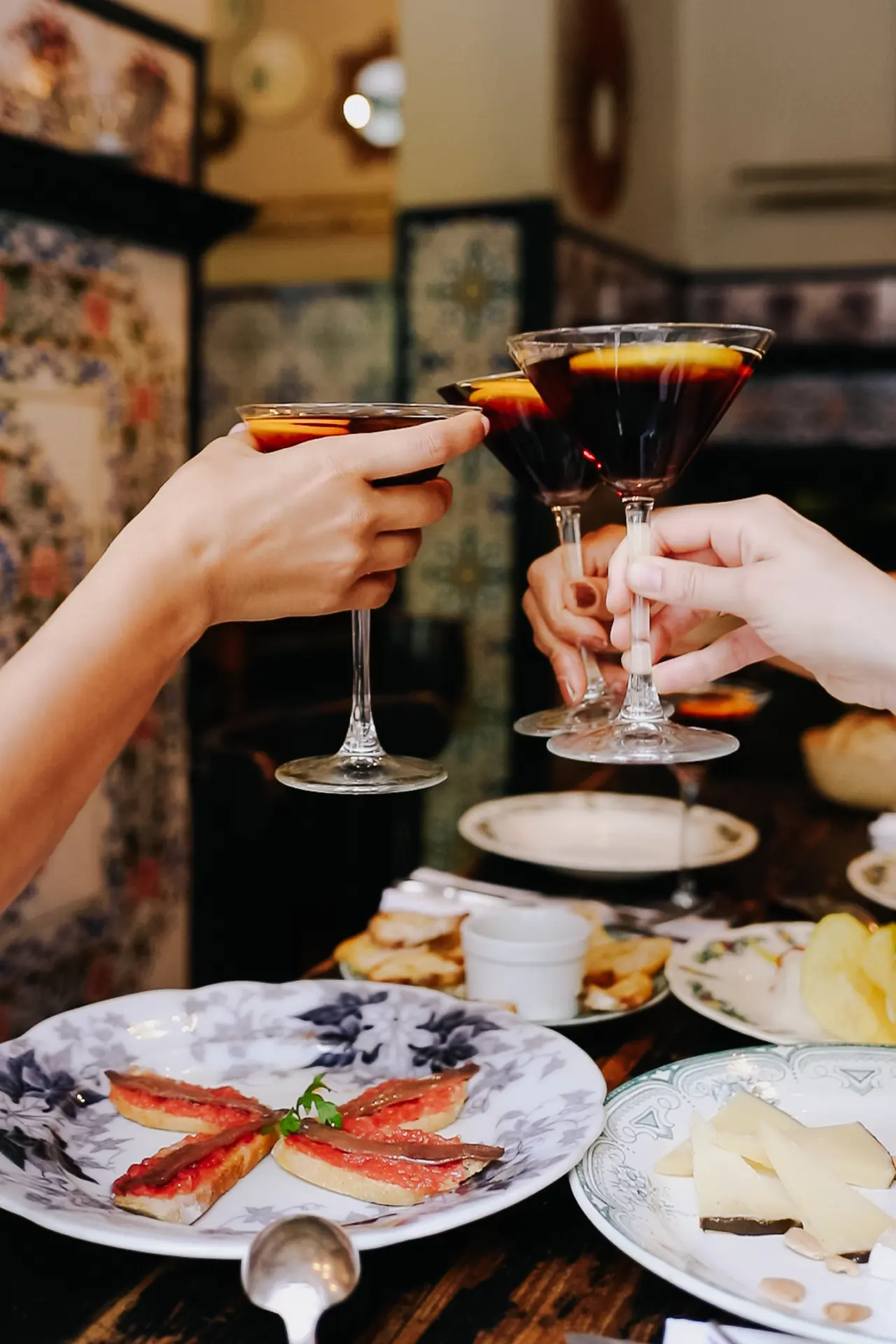
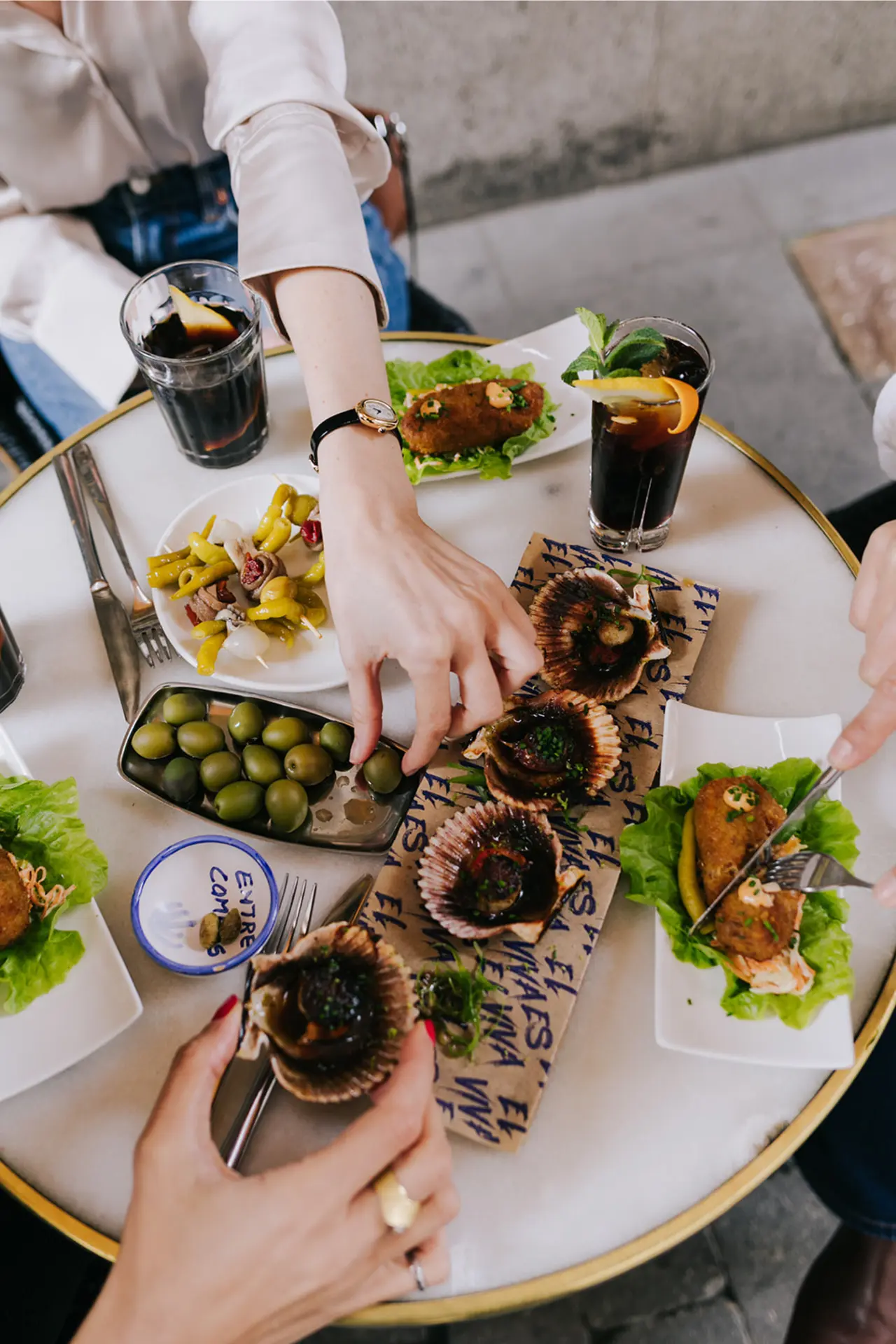
Vermouth’s popularity grew thanks to a beloved social ritual: La hora del vermut. Traditionally, this “vermouth hour” is the window before lunch, late morning to early afternoon, when Spaniards gather with friends and family to enjoy a glass of vermouth and a couple of tapas. The beauty of vermouth is that it’s not only a drink, but also a peek into Spanish culture. To sip vermouth in Spain is to join a tradition that values pause, presence, and the simple joy of being together.
In Spain, vermouth is often poured straight from the tap and enjoyed in plazas, markets, and neighborhood taverns across the country. In Madrid, locals often enjoy a vermouth after wandering the famous Rastro market in La Latina, and in Barcelona, vermouth shines in vermuterías, bars dedicated entirely to the drink. We love these recommendations for bars in Madrid by Tapas Magazine and in Barcelona by Eater.